Investment Casting Process: An Engineering Guide
A practical introduction to the typical lost-wax casting route and the information needed to discuss a custom industrial part.
General process guidance · Reviewed October 14, 2026
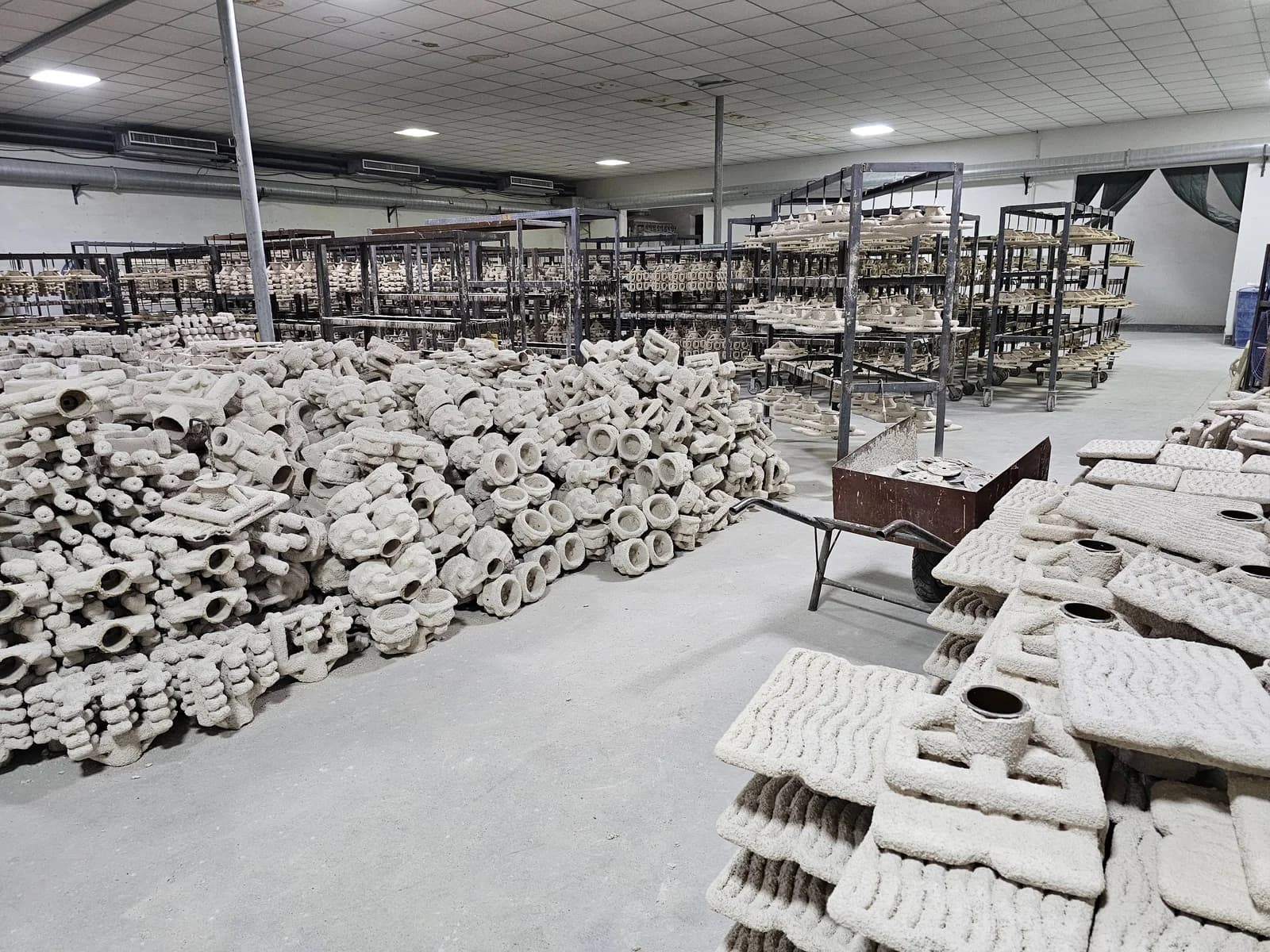
Ceramic shell molds in the supplied workshop photo library. The overview below describes a typical process, rather than a verified operation-by-operation record for every Lastwell order.
What is the investment casting process?
Investment casting uses an expendable pattern to form a mold cavity. In a typical lost-wax route, a wax pattern represents the part shape. Patterns are assembled, surrounded by a refractory shell, removed, and replaced with molten metal. After solidification, the shell and gating are removed and the casting is prepared for any specified finishing or machining.
1. Review the drawing and pattern requirements
The geometry, material specification and required finished features establish the starting point. Tooling and pattern decisions need to account for the casting route; they should not be treated as a direct copy of the finished-part drawing without review.
2. Produce and assemble the patterns
Wax patterns are typically formed and attached to a gating arrangement. The arrangement supports subsequent mold creation and metal flow. Details vary with the part and manufacturing method.
3. Build the ceramic shell
A refractory shell is built around the pattern assembly. Shell preparation and drying create the mold structure required for the next stages. This guide does not prescribe a shell recipe or claim a particular proprietary system.
4. Remove the wax and prepare the mold
The wax is removed and the shell is prepared for casting. The resulting cavity represents the pattern geometry. Process conditions depend on the material and manufacturing method.
5. Cast, cool and remove the shell
Molten metal fills the prepared mold and solidifies. The ceramic shell is removed, castings are separated from the gating, and the parts proceed to the agreed cleaning and finishing stages.
6. Machine and inspect the required features
Some surfaces can remain as cast; others may require machining. The finished drawing and agreed inspection criteria determine which additional operations are necessary.
What should the drawing define?
A 3D model helps communicate shape. The current 2D drawing should define the dimensions, material, revision and acceptance criteria that govern the order.
- Required grade and material standard, including documents needed.
- Datums and critical dimensions, with tolerances explicitly identified.
- Features intended to remain as cast and surfaces requiring machining.
- Thread specifications, assembly interfaces and surface requirements.
- Quantity and any required inspection or reporting format.
Wall sections, transitions, access and manufacturing allowances need part-specific review. A general guide cannot establish a guaranteed tolerance, minimum wall or lead time for an individual component.
Where CNC machining fits
A cast body can provide the overall form while CNC machining establishes specified holes, threads, mounting faces or mating interfaces. The allowance and datum strategy must be reviewed together so the casting supports the subsequent operations.
Lastwell’s confirmed CNC operations include turning, milling, drilling and tapping. Standalone CNC machining from bar and plate is also available; a casting order is not required.
Discuss casting and CNC machining together →Agree inspection and quotation requirements
Define what the finished part must satisfy before the order scope is agreed. Lastwell uses calipers for applicable dimensional checks and thread plug gauges for applicable internal-thread checks. A factory quality inspection report can be provided; additional methods or tests need review.
For stainless steel, 304, 316 and 316L can be discussed. The formal casting designation and material standard are governed by the actual material documentation, not automatic equivalence to a similarly named wrought grade.
Submit the drawing revision, material specification, quantity and critical requirements. Tolerances, minimum order quantities and lead times are evaluated for the project.
Further reading
For general process background, see the European Investment Casters’ Federation overview and the Investment Casting Institute shell-building explanation. These sources describe industry methods; they are not certification or evidence of Lastwell’s project-specific capabilities.